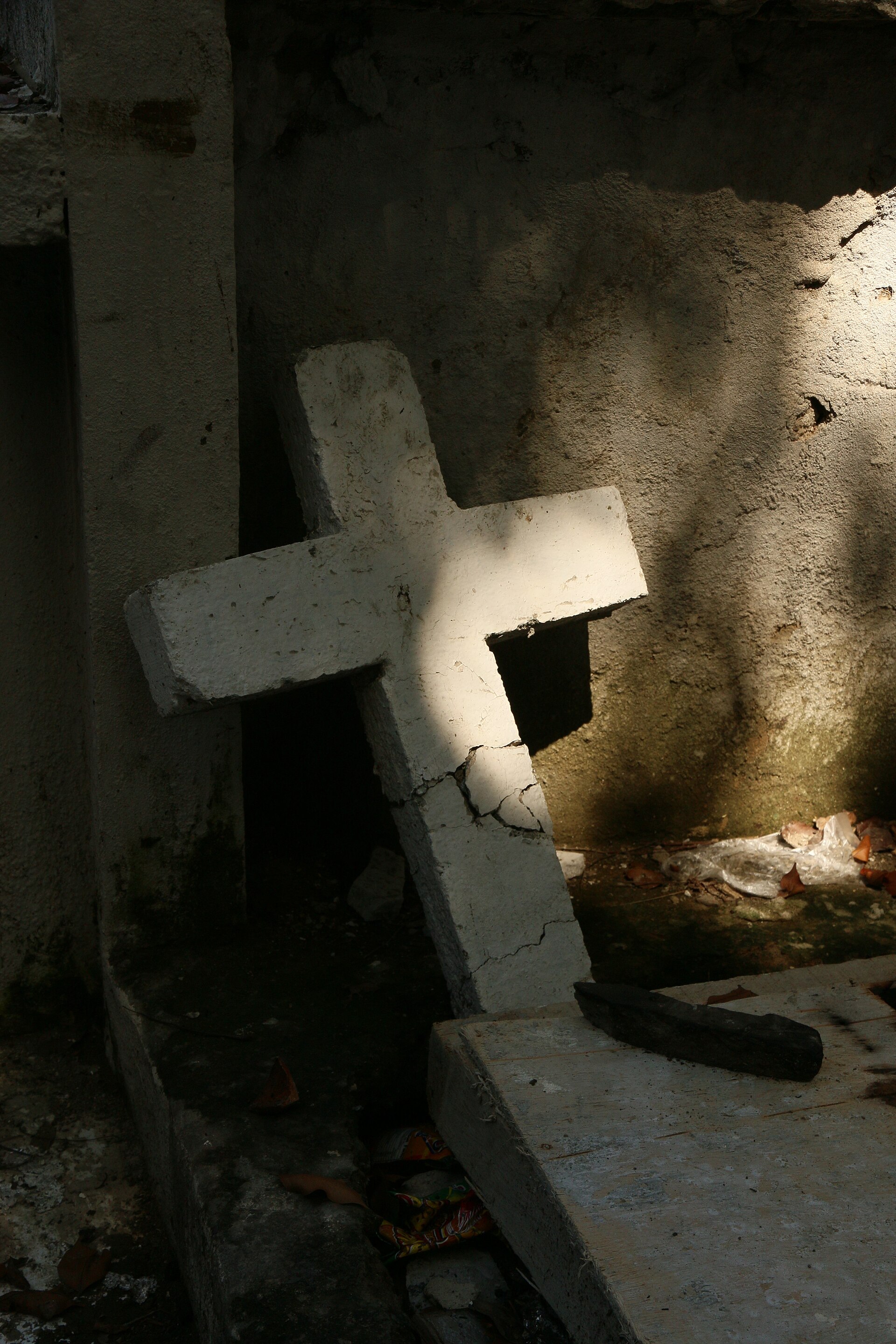
Øyvind Holmstad, CC BY-SA 4.0, via Wikimedia Commons
What is atheism? Real answers from a real atheist
Information moves faster than ever before, shattering boundaries, challenging our ideas, and sparking our curiosity. There are few questions more exciting and grandiose than “Is there a God?”, and more people are finding the wherewithal to ask it every day.
The number of religious “nones” worldwide rose to 24.2% in 2020¹, with noticeable increases in both Europe and the United States. Some are satisfied with remaining “unaffiliated,” while others take on the labels of “agnostic” or “atheist.” In this article, I’ll lay out what these terms mean so you can satisfy your curiosity or find your place in this range of secular opinions.
The number of religious “nones” worldwide rose to 24.2% in 2020¹, with noticeable increases in both Europe and the United States. Some are satisfied with remaining “unaffiliated,” while others take on the labels of “agnostic” or “atheist.” In this article, I’ll lay out what these terms mean so you can satisfy your curiosity or find your place in this range of secular opinions.
What is atheism?
In everyday conversation, atheism means “a disbelief or lack of belief in gods.” The “disbelief/lack of belief” language is intentionally ambiguous, leaving the label open to both those who “actively disbelieve” and those who are simply unconvinced. It works for everyday purposes because it generally describes anyone who doesn’t believe in gods.
In philosophical terms, atheism describes the position that there are no gods. Since you can’t prove a negative, philosophical atheism is mostly reactive. When confronted with an argument for theism, an atheist is the person who takes the stance that it’s invalid, unconvincing, or inferior to a naturalist explanation.
In philosophical terms, atheism describes the position that there are no gods. Since you can’t prove a negative, philosophical atheism is mostly reactive. When confronted with an argument for theism, an atheist is the person who takes the stance that it’s invalid, unconvincing, or inferior to a naturalist explanation.
What does it mean to be an atheist?
Being an atheist means accepting the idea that there is no immaterial or spiritual influence on your life. Having not been convinced by any claim that there is, you default to the natural conclusion: that the material is all that there is; no god, no afterlife, no one answering prayers. As bleak as that might sound to some, it’s actually an empowering revelation (pun intended).
An atheist is a skeptic who questions preconceived notions that could give them an inaccurate view of reality. Rather than accepting a superstitious answer to hard questions like “What happens after we die?”, an atheist approaches it from a place of intellectual honesty. We admit that the most likely outcome is that we become compost, and that — crucially — we must live with that knowledge. Suddenly, every moment is that much more precious, as there’s no guarantee that it won’t be our last.
Atheists might treat hard questions with dispassionate objectivism, but we also delight in discovering tangible, verifiable answers. For example, the answer to “Where did humans come from?” involves millions of years of evolution by natural selection, and a profound discovery that we all share the same ancestors. By approaching that answer without attributing a divine designer, we can truly appreciate the awe-inspiring natural processes and mind-blowing timescales required to make humans — and all living things — so incredibly special.
An atheist is a skeptic who questions preconceived notions that could give them an inaccurate view of reality. Rather than accepting a superstitious answer to hard questions like “What happens after we die?”, an atheist approaches it from a place of intellectual honesty. We admit that the most likely outcome is that we become compost, and that — crucially — we must live with that knowledge. Suddenly, every moment is that much more precious, as there’s no guarantee that it won’t be our last.
Atheists might treat hard questions with dispassionate objectivism, but we also delight in discovering tangible, verifiable answers. For example, the answer to “Where did humans come from?” involves millions of years of evolution by natural selection, and a profound discovery that we all share the same ancestors. By approaching that answer without attributing a divine designer, we can truly appreciate the awe-inspiring natural processes and mind-blowing timescales required to make humans — and all living things — so incredibly special.
What’s the difference between atheism and agnosticism?
The key difference between atheism and agnosticism is between belief and knowledge.
- An atheist lacks a belief in a god (a = without; theism = belief in a god), meaning they are unconvinced that a god or gods exist.
- An agnostic lacks knowledge of a god (a = without, gnostic = knowledge), meaning they’re unconvinced that they can know whether a god or gods exist.
This seemingly small difference has spawned several debates about whether one can truly be 100% atheist, so there’s no shortage of grids, diagrams, and spectrums on the internet seeking to illustrate different combinations of atheism and agnosticism. In my opinion, these are distinctions without useful differences.
In this case, I believe simpler definitions, like those above, are more useful in describing the difference in these two groups’ epistemological stance:
- An atheist believes that we can know whether gods exist, and that the best reading of our current evidence is that they do not.
- An agnostic believes that our current evidence is insufficient to decide whether gods exist.
Russell’s Teapot
Russell’s Teapot is a neat philosophical thought experiment that can shed light on the difference between atheism and agnosticism. It was put forward by Bertrand Russell in a 1952 essay titled “Is There a God?” In it, he mentions that it’s impossible to prove that there is not a china teapot orbiting the Sun between Mars and Earth, but that it’s so unlikely that we wouldn’t take that claim seriously².
You cannot prove that the claim isn’t true, though, since you cannot simultaneously check every square inch of space between Mars and Earth to look for it. The claim is unfalsifiable, and for many atheists, that’s enough to form a belief that it is untrue. Meanwhile, an agnostic might agree that the claim is unlikely, but would still claim uncertainty.
You cannot prove that the claim isn’t true, though, since you cannot simultaneously check every square inch of space between Mars and Earth to look for it. The claim is unfalsifiable, and for many atheists, that’s enough to form a belief that it is untrue. Meanwhile, an agnostic might agree that the claim is unlikely, but would still claim uncertainty.
What does an atheist believe?
Atheism is not a belief system in and of itself. At its core, it’s a philosophical position about the truth of theistic claims. Atheists “believe” that gods don’t exist in the same way most people “believe” that leprechauns, unicorns, and honest politicians don’t exist. That is, they’ve heard stories of them, they’ve probably met people who believe in them, but they’ve never been convinced of their existence.
If anything in the atheist position could be considered a debatable belief, it would be the axiom that unfalsifiable claims about observable things are patently untrue. If you want to convince an atheist of the literal existance of something, you first have to convince us that the claim you’re making is sound, meaning there must be some way to prove it through empirical observation. Then, we can get into the particulars of whether that claim is true.
While theistic claims include many philosophical arguments that don't necessarily need to be falsifiable, they also make several claims about material reality. If there is a god, and it created the universe in seven days, answers prayers, and occasionally performs miracles, we'd expect to see material evidence of these claims. Worse yet, you cannot test these claims objectively, though attempts have been made.
If anything in the atheist position could be considered a debatable belief, it would be the axiom that unfalsifiable claims about observable things are patently untrue. If you want to convince an atheist of the literal existance of something, you first have to convince us that the claim you’re making is sound, meaning there must be some way to prove it through empirical observation. Then, we can get into the particulars of whether that claim is true.
While theistic claims include many philosophical arguments that don't necessarily need to be falsifiable, they also make several claims about material reality. If there is a god, and it created the universe in seven days, answers prayers, and occasionally performs miracles, we'd expect to see material evidence of these claims. Worse yet, you cannot test these claims objectively, though attempts have been made.
The Great Prayer Experiment
In 2006, the Templeton Foundation funded a large-scale Study of the Therapeutic Effects of Intercessory Prayer (STEP)3. It was a double-blind study in which 1,802 heart bypass patients were prayed for by three Christian congregations. The patients (65% of which believed in the power of prayer) were told about the experiment and then randomly split into three categories:
- Those who were told they would be prayed for and were.
- Those who were told they might be prayed for and were.
- Those who were told they might be prayed for but weren't.
Of the three groups, the only patients who had more post-surgery complications were the first group (59% vs 52% and 51%). It's thought that the stress of knowing they were being prayed for might have caused that increase. It's a lot of pressure to put on someone. To me, this study says more about the harmful power of suggestion and superstition than it does about the power of prayer, but make no mistake, the Templeton Foundation absolutely set out to prove the latter.
I don't think this study would have been definitive in any way; the causes of any trends in the data would have been far too debatable no matter the results. However, it goes to show the lengths people have gone to in testing theistic claims, and how they still come up short. I appreciate their efforts, and I applaud them for keeping the results open and free to the public despite being somewhat of an egg on their face. That's good science, but it's still a long way from a falsifiable method to legitimately discover material evidence of supernatural claims.
I don't think this study would have been definitive in any way; the causes of any trends in the data would have been far too debatable no matter the results. However, it goes to show the lengths people have gone to in testing theistic claims, and how they still come up short. I appreciate their efforts, and I applaud them for keeping the results open and free to the public despite being somewhat of an egg on their face. That's good science, but it's still a long way from a falsifiable method to legitimately discover material evidence of supernatural claims.
Want to debate? Let’s do it!
The main difference between theists, atheists, and agnostics is their willingness to consider unfalsifiable claims. Whether you call that willingness faith or superstition is a matter of debate, and I’m here for it.
My next work is a book titled Choose Your Own Debate With: An Atheist, in which I take on the role of an atheist interlocutor in your pocket. In classic, choose-your-own-adventure style, you select the arguments to debate the theist perspective and read the atheist’s (that’s me) response. Check it out in my Works in Progress page, and follow me on Bluesky for regular updates on my progress.
My next work is a book titled Choose Your Own Debate With: An Atheist, in which I take on the role of an atheist interlocutor in your pocket. In classic, choose-your-own-adventure style, you select the arguments to debate the theist perspective and read the atheist’s (that’s me) response. Check it out in my Works in Progress page, and follow me on Bluesky for regular updates on my progress.
References
1: Hackett, Conrad, Marcin Stonawski, Yunping Tong, Stephanie Kramer, Anne Fengyan Shi and Dalia Fahmy.
2025. “How the Global Religious Landscape Changed From 2010 to 2020.” Pew Research Center. doi: 10.58094/fj71-ny11.
2: Russell, Bertrand. (1997). "Is There a God?". In The Collected Papers of Bertrand Russell, Volume 11: Last Philosophical Testament, 1943–68. London: Routledge.
3: Benson H, Dusek JA, Sherwood JB, Lam P, Bethea CF, Carpenter W, Levitsky S, Hill PC, Clem DW Jr, Jain MK, Drumel D, Kopecky SL, Mueller PS, Marek D, Rollins S, Hibberd PL. Study of the Therapeutic Effects of Intercessory Prayer (STEP) in cardiac bypass patients: a multicenter randomized trial of uncertainty and certainty of receiving intercessory prayer. Am Heart J. 2006 Apr;151(4):934-42. doi: 10.1016/j.ahj.2005.05.028. PMID: 16569567.
2025. “How the Global Religious Landscape Changed From 2010 to 2020.” Pew Research Center. doi: 10.58094/fj71-ny11.
2: Russell, Bertrand. (1997). "Is There a God?". In The Collected Papers of Bertrand Russell, Volume 11: Last Philosophical Testament, 1943–68. London: Routledge.
3: Benson H, Dusek JA, Sherwood JB, Lam P, Bethea CF, Carpenter W, Levitsky S, Hill PC, Clem DW Jr, Jain MK, Drumel D, Kopecky SL, Mueller PS, Marek D, Rollins S, Hibberd PL. Study of the Therapeutic Effects of Intercessory Prayer (STEP) in cardiac bypass patients: a multicenter randomized trial of uncertainty and certainty of receiving intercessory prayer. Am Heart J. 2006 Apr;151(4):934-42. doi: 10.1016/j.ahj.2005.05.028. PMID: 16569567.
I'm looking for representation
Interested?
Interested?
Let's Discuss